How to make your restaurant visible to AI: a practical guide
Guests now ask ChatGPT and Google's AI where to eat. Six practical moves — data consistency, detailed reviews, earned media and more — that decide whether the answer includes you.
By Vladimir Pitenin · Founder & CEO, Norly
A guest doesn't ask their phone for “restaurants near me” anymore. They ask, “Where can I work for a few hours with good coffee?” or “A calm place for a first date in this neighborhood?” — and an assistant answers with two or three names. Half of consumers already use AI-powered search, and for a growing share of them the answer is the decision. Either your place is in it, or it isn't.
The good news: what makes a venue visible to AI is not a trick, and it's not a budget. It's a short list of habits — most of them free — that compound. Here they are, in the order we'd do them.
1. Make your data identical everywhere
Assistants don't take your word for anything — they verify you against multiple sources before recommending you. Research on AI search shows brand-owned websites supply only 5–10% of the content in AI-generated summaries; the rest comes from third-party sources the model cross-references. When your name, address, hours and story match on Google, TripAdvisor, Facebook, Yelp and your own site, the model sees corroboration. When they conflict, recommending you becomes a risk — and the safe move for an AI is to name someone else.
- One exact business name everywhere — no “Café Aroma” here and “Aroma Coffee House” there.
- Hours that match on every platform, including holiday hours.
- The same one-paragraph story: what you are, for whom, since when.
- One phone number, one booking link, one menu link.
2. Fill out everything — attributes, photos, menu
Consistency says “this data is true.” Completeness says “this place is knowable.” Profiles filled to 100% give the model facts to match against real queries: Wi-Fi, power outlets, a smoking area, outdoor seating, dog-friendliness, noise level, payment methods. If an attribute isn't stated anywhere, the assistant can't assume it — it just recommends a venue where it is stated.
Photos matter more than most owners think, because modern models read images, not just text. Interior shots tell an AI whether you look like a laptop café or a candle-lit date spot; menu photos — ideally a real text menu, not a blurry PDF scan — tell it what you serve and at what price point. Caption your photos: “quiet mezzanine with power outlets” is machine-readable evidence.
3. Collect reviews that actually say something
Rating and volume are the baseline — the classic Harvard study found one extra star lifts an independent restaurant's revenue by 5–9%, and assistants weigh the same signals. But here's what changed with AI: every query is personal. Someone asking for “a quiet café to work from” triggers a search through review text for mentions of quietness, stable Wi-Fi, outlets, staying for hours. Someone asking for “a place to celebrate” triggers a different pass through the same reviews.
That means “Great place, 5 stars” — the review most venues collect — is nearly invisible to AI. It can't be matched to any occasion, and it can't be quoted. Research on generative engines found that quotable, specific material is exactly what gets surfaced: adding quotations and concrete statistics boosted a source's visibility in AI answers by around 40%. Your guests' detailed sentences are that material.
And one more thing owners learn the hard way: reviews must be asked for. A satisfied guest pays and leaves; a disappointed one opens Google in the taxi. If you don't actively invite feedback from the happy majority, your public record skews negative all by itself.
4. Be present beyond the big platforms
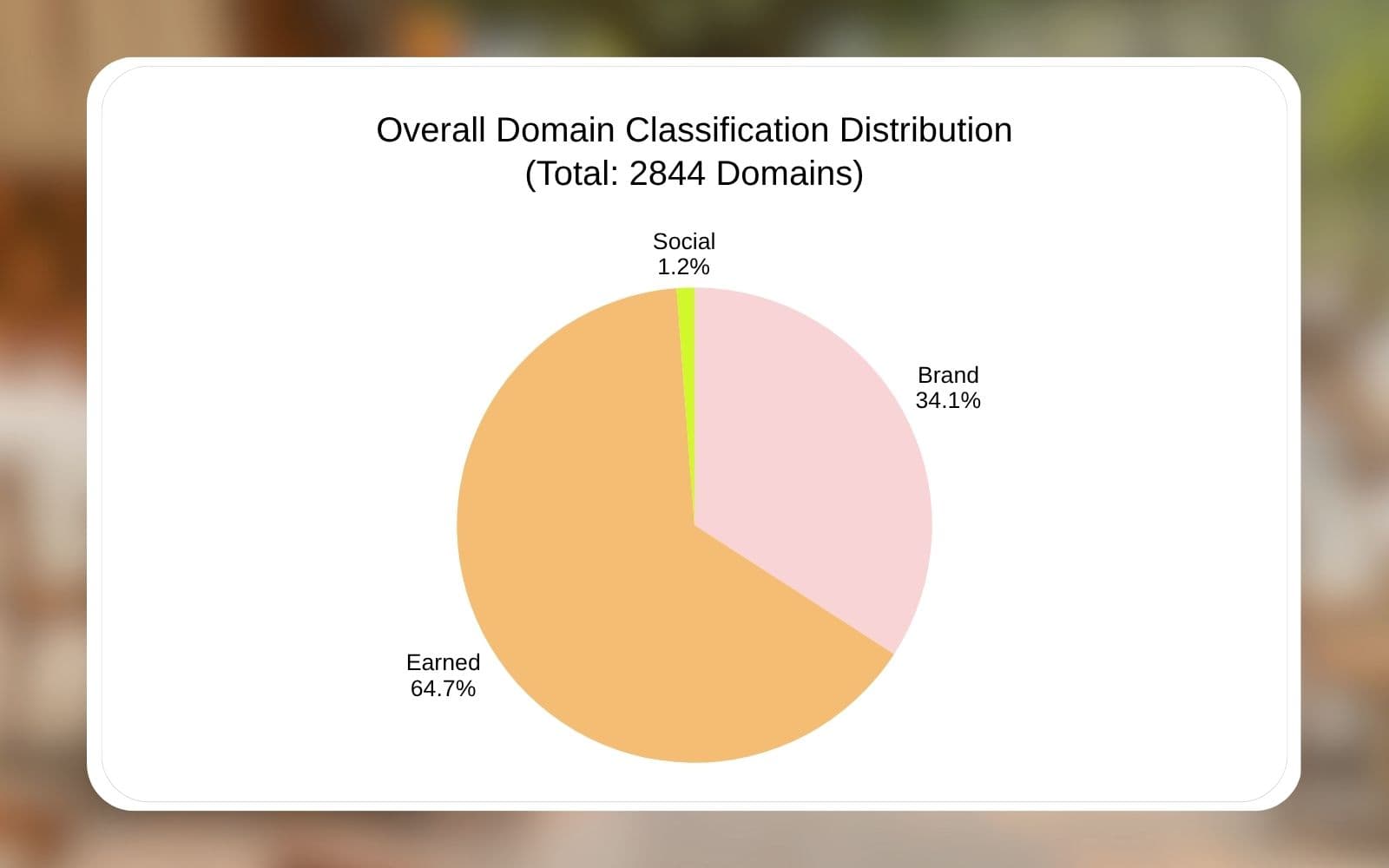
A 2025 University of Toronto study of ChatGPT, Perplexity, Gemini and Claude found that 64.6% of the sources AI engines cite are “earned media” — third-party editorial content — versus 34% brand-owned and barely 1% social. In restaurant terms: review platforms, city guides, “best of” lists and food blogs are where assistants look. Your own website matters, but it is a minority shareholder in your AI visibility.
- Get into local “top 10” lists and neighborhood guides — assistants quote them constantly. Pitch the local food blogger; host the community event that gets written up.
- Publish your own guides, too — “the best specialty coffee spots in [your district], including us” is a legitimate, useful page that AI can cite.
- Don't ignore Reddit and community forums — authentic threads about your area get read by both people and models.
- Claim the non-obvious platforms. Foursquare has pivoted into a location-data provider for AI products, and its Swarm app still hosts check-ins and tips — business verification is free. Bing Places feeds Microsoft's ecosystem, including Copilot. Ten minutes each, close to zero competition.
5. Handle problems before they become public text
A negative review doesn't just scare future guests — it scares the model. An assistant matching “calm place for a business meeting” against a review that says “music so loud we couldn't talk” will quietly drop you from that shortlist. The math is brutal: one specific negative sentence can subtract you from an entire category of queries.
You can't (and shouldn't) suppress honest criticism. What you can do is give unhappy guests a faster private path than the public one. Most people who write angry reviews aren't trying to hurt you — they're trying to be heard. A visible “something didn't go as planned? tell us directly” channel means the manager hears about the cold soup while the guest is still at the table: apologize, fix it, comp the dessert. Handled well, these guests convert into your most loyal regulars — and the review that never needed to be written never trains an AI against you. Reply to the public reviews you do get, positive and negative; an answered complaint reads very differently to both humans and models.
6. Make your own site machine-readable
Your site won't carry your AI visibility alone, but when a model does check it, make the check easy. The Toronto researchers put it bluntly: treat your website like an API for AI. Practically: structured data (schema.org markup for your business, menu, hours), real HTML text instead of text baked into images, a menu page that isn't a 10 MB PDF, and your story written out in plain sentences a model can quote.
Where to start (a realistic order)
- 01This week: audit name/hours/phone across Google, TripAdvisor, Facebook, Yelp. Fix every mismatch. Claim Foursquare and Bing Places.
- 02This month: complete every attribute field, upload captioned photos of the room and a readable menu, and start asking every guest for detailed feedback — systematically, not when someone remembers.
- 03This quarter: get into two local guides or lists, publish one useful neighborhood guide of your own, and build the habit of replying to every review.
None of this is glamorous. All of it compounds — and the venues that started six months ago are already the ones your assistant names first. If you're curious about the evidence behind each habit, we unpacked the five studies this guide stands on — and if you want to see how we turned these habits into a product, that story is here.
Sources
- 01McKinsey — New front door to the internet: winning in the age of AI search (2025)
- 02Aggarwal et al. — GEO: Generative Engine Optimization, KDD 2024
- 03Chen et al. — Generative Engine Optimization: How to Dominate AI Search, University of Toronto, 2025
- 04Luca — Reviews, Reputation, and Revenue: The Case of Yelp.com, Harvard Business School

Vladimir Pitenin
Founder & CEO, Norly
Building visibility tools for cafés and restaurants. Writes about reviews, maps and AI search — with sources.
Read next
At least 85% of restaurants are invisible to AI. We measured an entire market to find out why.
We audited every café, restaurant and bar in two markets against ChatGPT, Claude, Gemini and Perplexity. 85.6% were never recommended once — and we found what separates the rest.
Inside Norly: how we engineer AI visibility for restaurants
A candid tour of how each Norly feature maps to the signals AI assistants read — steady detailed reviews on every platform, private negativity handling, and proof it's all actually happening.